Teaching Resources Center including syllabi, schedules, computer-aided tools, interactive simulations, screencasts, concept questions, textbook information, useful links, and in some cases, complete course notes
CACHE
Computer Aids for Chemical Engineering
CACHE is a 501(c)(3) not-for-profit that promotes the development and distribution of computer-related and/or technology-based educational aids for the chemical engineering profession. Some of the activities include:
- Organize and promote conferences and workshops on Computer Aided Process Operations/Chemical Process Control, Computer Aided Process Design, Molecular Modeling and Simulation, Systems Biology in Engineering, and Process Analytics and Machine Learning.
- Maintain a Teaching Resource Center: This center (https://cache.org/teaching-resources-center) houses a curated collection of materials to assist faculty in teaching chemical engineering core courses.
- Support LearnChemE: This free website contains teaching/learning resources for chemical engineering, including screencasts, interactive simulations, digital experiments, FE and PE exam reviews, programming boot camps, self-study modules, instructor resources, how to study/learn resources, and spreadsheets.
- Provide faculty grants to support development of computer-based educational modules (https://cache.org/computational-tools-development)
- Support faculty awards: ASEE Edgar CACHE Award, AIChE Himmelblau Award, AIChE Evans Award
- Provide graduate student travel awards: over $40,000 in last three years for conferences
- Provide student awards for best posters at conferences
- PSE Press: publishes research results on process systems engineering
- Systems and Control Transactions: conference proceedings on process systems engineering
- LAPSE: living archive for process systems engineering
Some recent accomplishments:
- Supported development of Learn Aspen in 24 hours by Tom Adams
- Supported development of Polymath software (https://polymathplus.org/) for numerical problem solving
Future Initiatives:
- Industrial Datasets – Making curated sets available to faculty.
- Molecular Modeling – working to develop curated best practices and teaching materials on how to use quantum chemistry, molecular simulation and machine learning.
Blog
 |
NC State’s College of Engineering is proud to be an Institutional Member of CACHEJim Pfaendtner Wednesday, October 22, 2025CACHE has made a positive impact on every university that I have worked for or studied at. Read More |
 |
Spotlight on a LearnChemE Video on Using Steam TablesJohn Falconer Sunday, October 19, 2025Check out this video from LearnChemE on how to use steam tables and learn more about LearnChemE! Read More |
 |
"Machine Learning for Engineers" Online Course Introduces Essential Skills to Engineering StudentsJohn Hedengren Sunday, October 19, 2025Machine Learning for Engineers is a BYU PRISM online course that introduces engineering students to supervised and unsupervised learning methods, including regression, classification, clustering, and neural networks. The course has been widely used for self-study and in classrooms, with supporting videos, exercises, and open-source software. Read More |
|
|
Video Highlight: Generative AI for Process Systems EngineeringJohn Hedengren Sunday, October 19, 2025This video introduces how Generative AI, especially Large Language Models, is accelerating the field of Process Systems Engineering (PSE). Read More |
 |
Member and Video Highlight – Carnegie Mellon UniversityJohn Kitchin Sunday, October 19, 2025A new scientific paradigm: agentic science Read More |
Pages
Reading Materials
 |
polymer and materials science Polymer Warriors: A Gamified Virtual-Real Integration Model for Task-Driven Learning in Polymer Chemistry Laboratories Yongsheng Niu, Liangyu Gong, Jie Wang, Lubin Xu, Shuaishuai Li, and Hongchun Li Journal of Chemical Education Tuesday, May 12, 2026 |
|
|
polymer and materials science Data Mining for Materials Science: A Jupyter-Based Tutorial for Students and Instructors Valentina Miranda and Carlos Jimenez-Orozco Journal of Chemical Education Thursday, April 30, 2026 |
 |
transport phenomena Enhancing heat transfer education through Energy2D: A case study on simulation-based learning Liqun Zhou, Chenglin Zhou, Shuting Yao, and Bowen Zhao Education for Chemical Engineers Tuesday, April 21, 2026 |
 |
miscellaneous Application of a virtual-physical hybrid teaching model in instrumental analysis experiments Xu Fei, Yao Li, Xiaolu Liu, Zhenyu Hu, and Cong Wang Education for Chemical Engineers Tuesday, April 21, 2026 |
|
|
reaction engineering A simulator for LED photoreactors: Integrating light-matter interaction modelling and intrinsic kinetic studies for chemical engineering education A. Parra-Marfil, M.A. Quintana, M.A. Martín-Lara, R.R. Solís, M. Calero, and M.J. Muñoz-Batista Education for Chemical Engineers Friday, April 17, 2026 |
Pages
 |
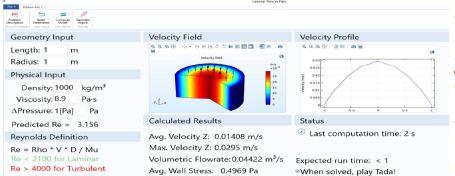 Development of Computational-Based Tools and Modules for Chemical Engineering Education Seed Grant Program |
 An article prepared by the CACHE Design Task Force argues that the emphasis on manufacturing processes over innovative product design is a critical gap in traditional chemical engineering design courses. |
 conference series in areas of importance to chemical engineering |
Institutional Members
As Institutional Members these colleges of engineering support CACHE's contributions to the engineering education community. Contact us (cache@cache.org) to become a supporter.


Departmental Members
Annual support from these Departmental Members enables CACHE to continue established activities while nurturing new projects. Contact us (cache@cache.org) to become a supporter.
 |
 |
 |
 |
 |
 |
 |
 |
 |
 |
 |
 |
 |
 |
 |
 |
 |
 |
 |
 |
 |
 |
 |
 |
 |
 |
 |
 |
 |
 |
 |
 |
 |
 |
 |
 |
 |
 |
 |
 |
 |
 |
 |
 |
 |
 |
 |
 |
 |
 |
 |
 |
 |
 |
 |
 |
 |
 |
 |
 |
 |
 |
 |
 |
 |
 |
 |
 |
 |
 |
 |


Theme by Danetsoft and Danang Probo Sayekti inspired by Maksimer