Teaching Resources Center including syllabi, schedules, computer-aided tools, interactive simulations, screencasts, concept questions, textbook information, useful links, and in some cases, complete course notes
CACHE
Computer Aids for Chemical Engineering
CACHE is a 501(c)(3) not-for-profit that promotes the development and distribution of computer-related and/or technology-based educational aids for the chemical engineering profession. Some of the activities include:
- Organize and promote conferences and workshops on Computer Aided Process Operations/Chemical Process Control, Computer Aided Process Design, Molecular Modeling and Simulation, Systems Biology in Engineering, and Process Analytics and Machine Learning.
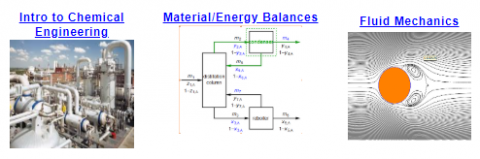
- Maintain a Teaching Resource Center: This center (https://cache.org/teaching-resources-center) houses a curated collection of materials to assist faculty in teaching chemical engineering core courses.
- Support LearnChemE: This free website contains teaching/learning resources for chemical engineering, including screencasts, interactive simulations, digital experiments, FE and PE exam reviews, programming boot camps, self-study modules, instructor resources, how to study/learn resources, and spreadsheets.
- Provide faculty grants to support development of computer-based educational modules (https://cache.org/computational-tools-development)
- Support faculty awards: ASEE Edgar CACHE Award, AIChE Himmelblau Award, AIChE Evans Award
- Provide graduate student travel awards: over $40,000 in last three years for conferences
- Provide student awards for best posters at conferences
- PSE Press: publishes research results on process systems engineering
- Systems and Control Transactions: conference proceedings on process systems engineering
- LAPSE: living archive for process systems engineering
Some recent accomplishments:
- Supported development of Learn Aspen in 24 hours by Tom Adams
- Supported development of Polymath software (https://polymathplus.org/) for numerical problem solving
Future Initiatives:
- Industrial Datasets – Making curated sets available to faculty.
- Molecular Modeling – working to develop curated best practices and teaching materials on how to use quantum chemistry, molecular simulation and machine learning.
Blog
 |
Meet the new members of CACHE Executive Committee (ExCom)Tuesday, October 20, 2026CACHE Board of Trustees held elections during the Summer meeting to elect new members of the ExCom. Read More |
 |
A Message from CACHE Executive Director Prof Ed MaginnEdward Maginn Monday, October 19, 2026The Executive Director is responsible for overseeing the finances and legal aspects of CACHE. Read More |
 |
Virtual Laboratories on LearnChemEJohn L. Falconer Sunday, October 18, 2026Virtual laboratories are intended to be mimics of physical laboratories that might be completed in a 3 or 4-hour period. Read More |
 |
CACHE-Relevant Highlights at the Upcoming AIChE Annual MeetingMonday, October 12, 2026Sessions, presentations, and the Himmelblau Award... Read More |
 |
FOMMS 2027 abstract submissions are now openMonday, October 5, 2026Theme: Molecular Modeling and Simulation: From Property Prediction to Inverse Design Read More |
Pages
Reading Materials
 |
AI and ML Cyberchemical Engineering: A Novel Curriculum for Industry 4.0 Readiness Seyed Abdollah Shojaei Education for Chemical Engineers Thursday, October 8, 2026 |
|
|
process Digital factory in chemical engineering education: Enhancing concept understanding and practical process training Aizhong jia, Jintang Shang, Dongsheng Zhang, and Qiusheng Yang Education for Chemical Engineers Tuesday, October 6, 2026 |
|
|
separations From Graphical Design to Digital Learning: One Hundred Years of the McCabe-Thiele Method Crisleine P. Draszewski and Flávio D. Mayer Education for Chemical Engineers Monday, October 5, 2026 |
 |
thermodynamics WaterPuzzle: An Educational Activity Using a 3D-Printable Magnetic Molecular Model to Explore Hydrogen Bonding, Ice Crystals, and Hydration of Molecules Yuna Ohtani, Konatsu Kondo, Shota Nakamura,Tania Guadalupe Peñaflor Galindo, and Jiro Kondo Journal of Chemical Education Thursday, October 1, 2026 |
 |
AI and ML Exploring the Potential of a Custom GenAI-Chatbot Specialized on Diagnosis and Remediation of Alternative Conceptions on Chemical Equilibrium Manuela Stueckler and Sebastian Tassoti Journal of Chemical Education Wednesday, September 30, 2026 |
Pages
 |
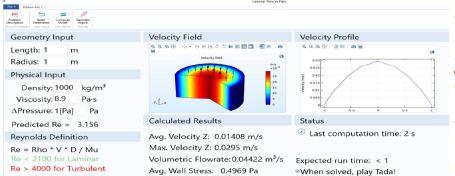 Development of Computational-Based Tools and Modules for Chemical Engineering Education Seed Grant Program |
 An article prepared by the CACHE Design Task Force argues that the emphasis on manufacturing processes over innovative product design is a critical gap in traditional chemical engineering design courses. |
 conference series in areas of importance to chemical engineering |
Institutional Members
As Institutional Members these colleges of engineering support CACHE's contributions to the engineering education community. Contact us (cache@cache.org) to become a supporter.


Departmental Members
Annual support from these Departmental Members enables CACHE to continue established activities while nurturing new projects. Contact us (cache@cache.org) to become a supporter.
 |
 |
 |
 |
 |
 |
 |
 |
 |
 |
 |
 |
 |
 |
 |
 |
 |
 |
 |
 |
 |
 |
 |
 |
 |
 |
 |
 |
 |
 |
 |
 |
 |
 |
 |
 |
 |
 |
 |
 |
 |
 |
 |
 |
 |
 |
 |
 |
 |
 |
 |
 |
 |
 |
 |
 |
 |
 |
 |
 |
 |
 |
 |
 |
 |
 |
 |
 |
 |
 |
 |


Theme by Danetsoft and Danang Probo Sayekti inspired by Maksimer